
The Whales of Cabo San Lucas
Cabo sits where the Pacific Ocean meets the Sea of Cortez — rich, warm, sheltered waters that draw whales from across the North Pacific every winter. Here’s who you might meet, and when.
When to See Whales in Cabo
December
The first humpbacks arrive mid-month.
January
Numbers build fast; singing males and competitive groups.
February
Peak season: mothers and newborn calves, frequent breaching.
March
Still peak; calves grow stronger and more playful.
April
Whales begin heading north; season ends mid-April.
Outside whale season, Cabo’s waters are still full of life — dolphins and sea lions are here year-round.
Who You’ll Meet
Humpback Whale
The star of the season. Up to 16 meters long and famous for breaching, tail slaps, and songs that can last for hours. Seen on nearly every tour from mid-December to mid-April.
Gray Whale
Travels 10,000 km each way from the Arctic to Baja’s Pacific lagoons, where mothers raise their calves. Best seen in Magdalena Bay on our Gentle Giants Expedition.
Blue Whale
The largest animal that has ever lived, reaching up to 30 meters. Feeds in the Sea of Cortez near Loreto in late winter and spring.
Orca
Occasional visitors that pass through Baja waters. A rare and unforgettable sighting.
Bottlenose Dolphin
Often seen in playful pods riding the bow of the boat.
California Sea Lion
Our neighbors at Land’s End; you’ll visit their colony on every tour.
Whale Behaviors Explained
-
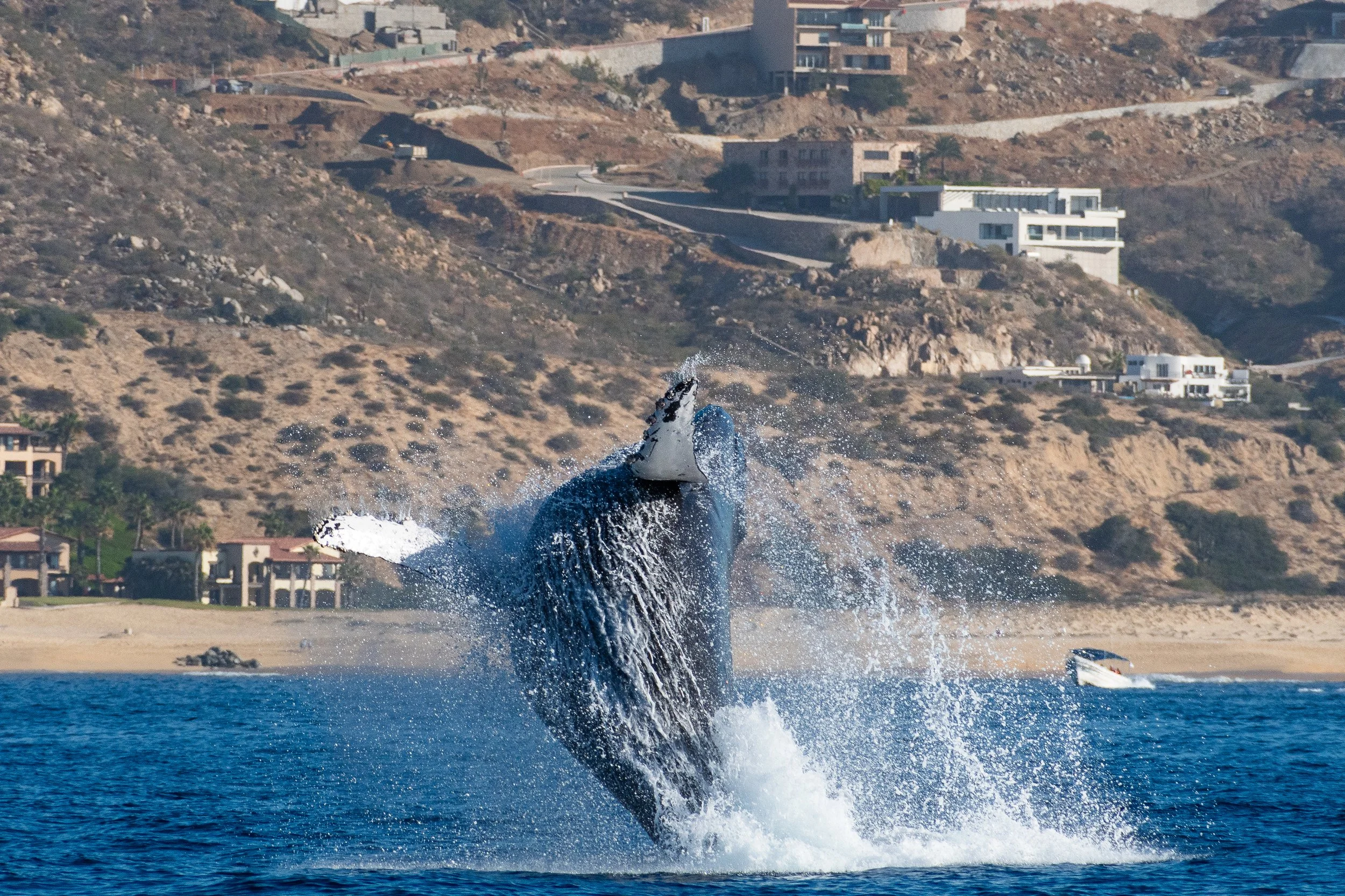
The whale launches most of its body out of the water and crashes back down.
-
Slapping the tail fluke on the surface, often as communication.
-
Rolling on its side and slapping a long pectoral fin on the water.
-
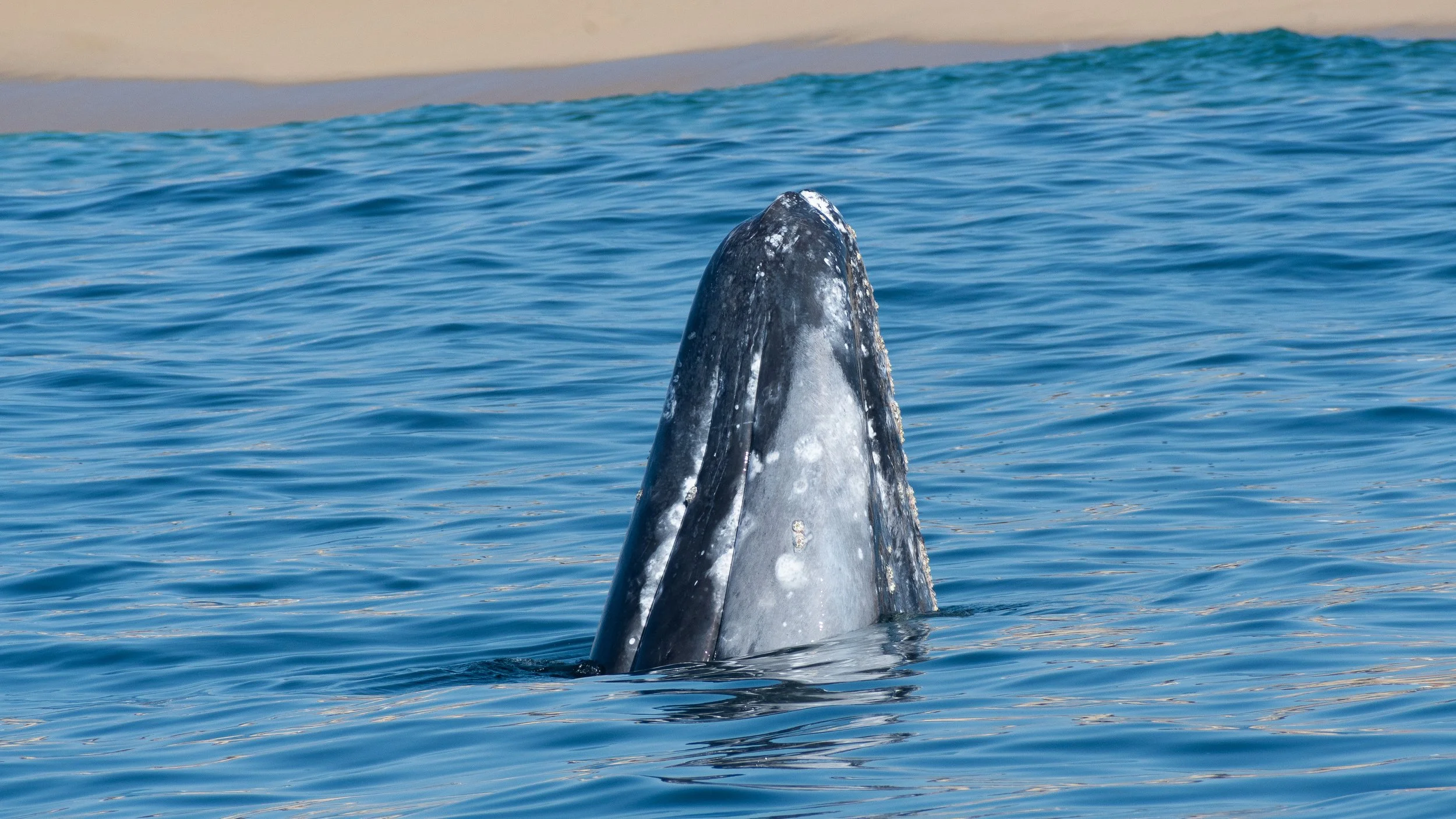
Rising vertically with its head out of the water to look around.
-
The spout of air and water vapor when a whale exhales at the surface.
-
Lifting the tail high before a deep dive.
Watching Whales Responsibly
Mexican law (SEMARNAT) sets how close boats may approach, how fast they can move near whales, and how long they may stay.
We follow every rule, keep our engines calm, and let the whales decide how close they come.